
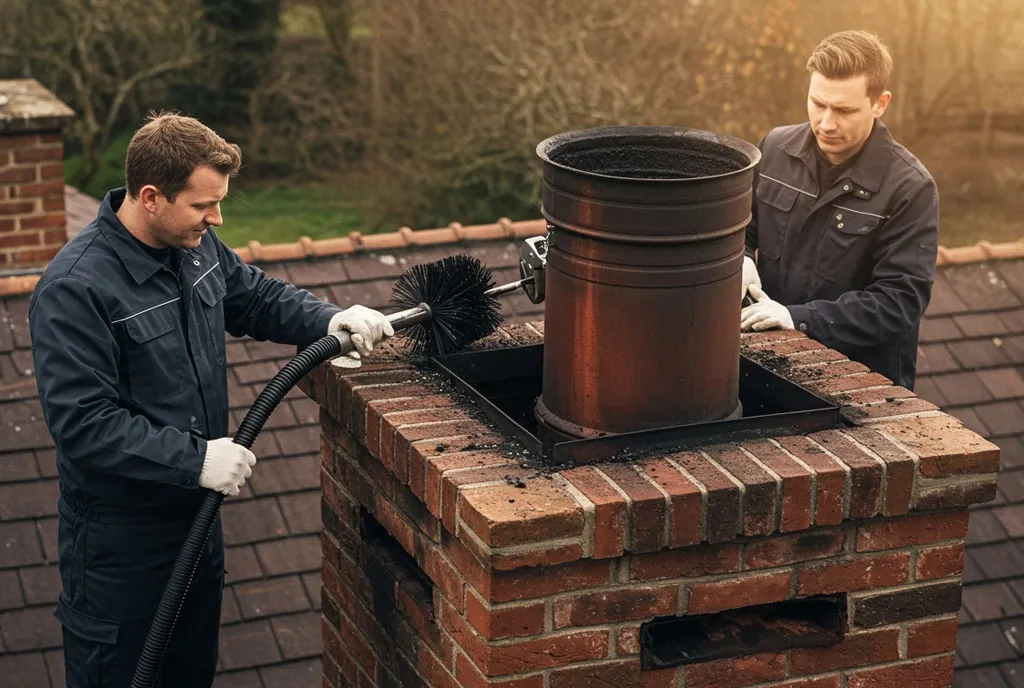
Homes in Colorado Springs rely on fireplaces more than many people realize. Cold winters, elevation, and sudden temperature drops make fireplaces a common source of supplemental heat. When chimneys are not cleaned regularly, that comfort can turn into a serious fire risk.
Chimney sweeping is one of the simplest ways to protect your home. It removes buildup that can ignite, restores proper airflow, and reduces the chance of smoke or heat escaping into areas where it does not belong.
Why Chimney Fires Start in the First Place
Most chimney fires start because of creosote buildup. Creosote forms when wood burns and smoke cools as it rises through the flue. Over time, it sticks to the chimney walls and hardens.
In Colorado Springs, many homes sit at higher elevation where fires burn differently and draft can be inconsistent. This leads to faster creosote accumulation, especially in older chimneys or fireplaces used frequently during winter.
Without regular chimney sweeping, creosote continues to build until it becomes flammable. A single spark or high temperature fire can ignite it.
Colorado Springs Weather Increases Fire Risk
The climate in Colorado Springs puts extra stress on chimneys. Cold air outside meets warm smoke inside the flue. This temperature difference causes smoke to cool faster, which increases creosote formation.
Snow and ice also sit on chimney crowns and caps. Moisture enters small cracks and affects draft. When airflow becomes restricted, smoke lingers longer inside the flue and leaves more residue behind.
Regular chimney sweeping clears this buildup before it becomes dangerous. It also helps identify airflow problems early, before they lead to fire hazards.
Older Homes Face Higher Risk
Many neighborhoods in Colorado Springs have older homes with masonry chimneys built decades ago. Areas like Old Colorado City, Patty Jewett, and parts of Downtown Colorado Springs commonly feature original brick chimneys.
Older chimneys often have rough interior surfaces that allow creosote to stick more easily. Some were built without modern liners or moisture protection.
A chimney may look fine from the outside but still contain heavy buildup showing only during a Chimney Inspection or sweep. This makes routine service especially important in older homes.
Chimney Sweeping Does More Than Prevent Fires
Fire prevention is the biggest reason to schedule sweeping, but it is not the only benefit.
Sweeping improves draft so smoke exits the home properly. It reduces smoky odors that linger in living spaces. It also lowers the chance of carbon monoxide backing up into the home.
In rental properties, chimney sweeping reduces tenant complaints and lowers liability. Property owners in Colorado Springs often schedule sweeping annually to keep fireplaces safe and compliant.
Signs a Chimney Needs Sweeping
Many homeowners do not realize sweeping is overdue until problems appear.
Common signs include:
- Smoke entering the room when a fire starts
- A strong soot smell even when the fireplace is not in use
- Dark buildup visible inside the firebox
- Debris falling into the fireplace
These signs often mean creosote levels are already high. Scheduling chimney sweeping removes the hazard before it becomes a fire risk.
Sweeping and Inspections Work Together
Chimney sweeping removes buildup. Inspections check for damage.
During a sweep, technicians often spot early issues like cracked liners, damaged crowns, or missing caps. These problems allow heat and moisture to damage the chimney structure.
If issues are found, services such as chimney cracks repair, crown seal repair, or chimney cap installation can prevent further risk.
Together, sweeping and inspection form a complete safety approach for fireplaces in Colorado Springs homes.
When to Schedule Chimney Sweeping in Colorado Springs
The best time to schedule chimney sweeping is before winter use begins. Many homeowners wait until cold weather arrives, which often leads to delays and emergency calls.
Homes that burn wood frequently should consider annual sweeping. Occasional use still builds creosote over time, especially in older chimneys.
Scheduling early ensures your fireplace is ready when temperatures drop and keeps fire risk low throughout the season.
Final Thoughts
Fireplaces add comfort to Colorado Springs homes, but only when the chimney is clean and safe. Chimney sweeping removes the buildup that causes most chimney fires and restores proper airflow through the flue.
For older homes, high elevation, and long winter use, sweeping is not optional maintenance. It is a safety requirement.
If your chimney has not been swept recently, scheduling chimney sweeping before winter use is one of the most important steps you can take to protect your home.
